Why 2026 HVAC Systems Prioritize Humidity Control
As an HVAC professional I have seen countless homeowners struggle with that sticky, clammy feeling that creeps in even when the thermostat reads a comfortable temperature. You might raise the air conditioning setting only to find the air still feels heavy while energy bills climb. That experience points to humidity rather than temperature alone.
High indoor humidity creates one of the most common comfort and efficiency challenges across many regions. The next generation of HVAC systems addresses this issue directly through advanced humidity control technology. These systems create balanced indoor environments that support health and efficiency.
This shift delivers benefits beyond comfort. It protects home structures, improves air quality, and reduces energy waste.
How Humidity Shapes Modern HVAC Performance
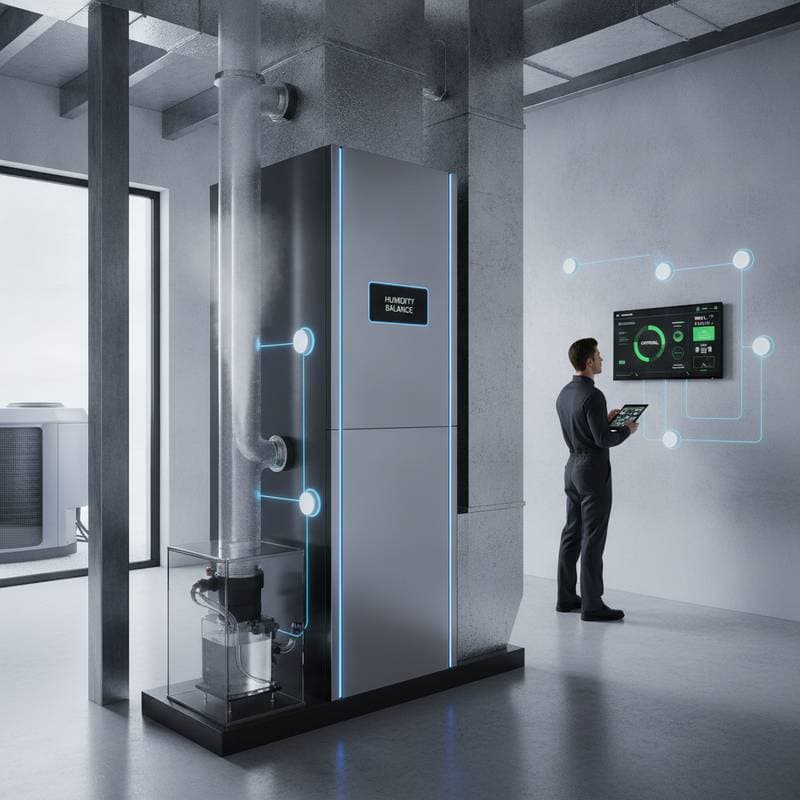
Current and upcoming HVAC systems incorporate a refined understanding of moisture effects on comfort, energy consumption, and air quality. Manufacturers now integrate variable speed compressors, smart sensors, and whole home dehumidification modules to maintain precise moisture levels.
The impact appears most clearly during seasonal extremes. In humid summers the system avoids overworking to achieve comfort. In dry winters it prevents static electricity, dry skin, and damage to wood surfaces.
Testing shows that balanced humidity makes a home feel up to three degrees cooler at the same thermostat setting. Homeowners can therefore raise the cooling temperature while maintaining comfort and reduce energy use by 10 to 15 percent.
Practical Steps for Year Round Moisture Management
Advanced HVAC features work best when paired with consistent home habits. Follow these steps to support balanced humidity.
- Operate kitchen and bathroom exhaust fans during cooking and showering to remove excess moisture promptly.
- Seal ductwork leaks that allow humid air from attics or crawl spaces to enter living areas.
- Improve insulation and air sealing around the building envelope to limit outdoor air infiltration.
- Schedule seasonal cleaning of evaporator coils and drain lines to prevent clogs that retain moisture.
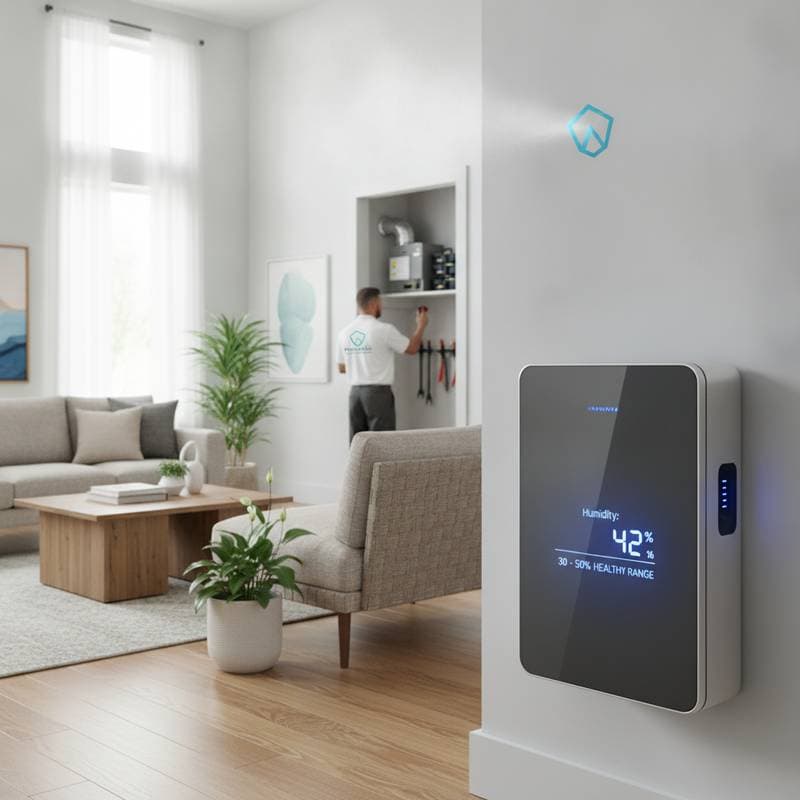
- Maintain indoor relative humidity between 40 and 50 percent to discourage mold growth while preserving comfort.
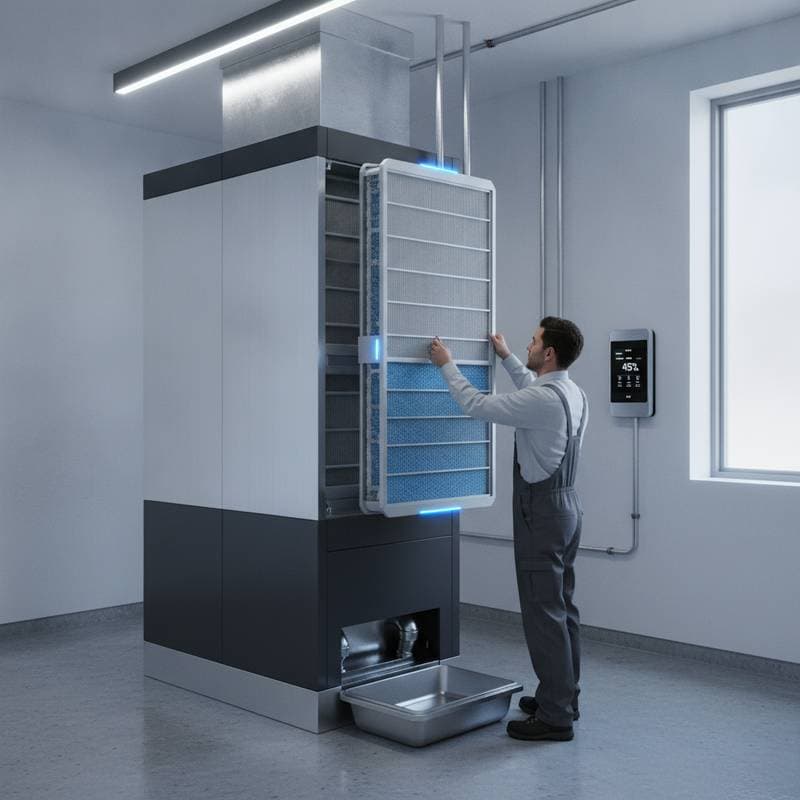
Schedule professional maintenance twice each year. A technician can calibrate sensors, clean coils, and verify that any dehumidifier or humidifier operates at full capacity.
Indicators That Humidity Levels Require Attention
Moisture imbalances often become noticeable through specific symptoms. Watch for persistent musty odors or visible mold, condensation on windows, warped wood floors or cracking paint, frequent allergy symptoms, and air conditioning short cycling with elevated energy costs.
Two or more of these signs warrant a professional humidity assessment. A technician can measure relative humidity, inspect duct seals, and recommend appropriate equipment upgrades.
Selecting Equipment That Matches Your Climate Needs
When an HVAC system approaches replacement or fails to maintain comfort, consider models designed for humidity management. Consult a licensed professional who understands local climate conditions.
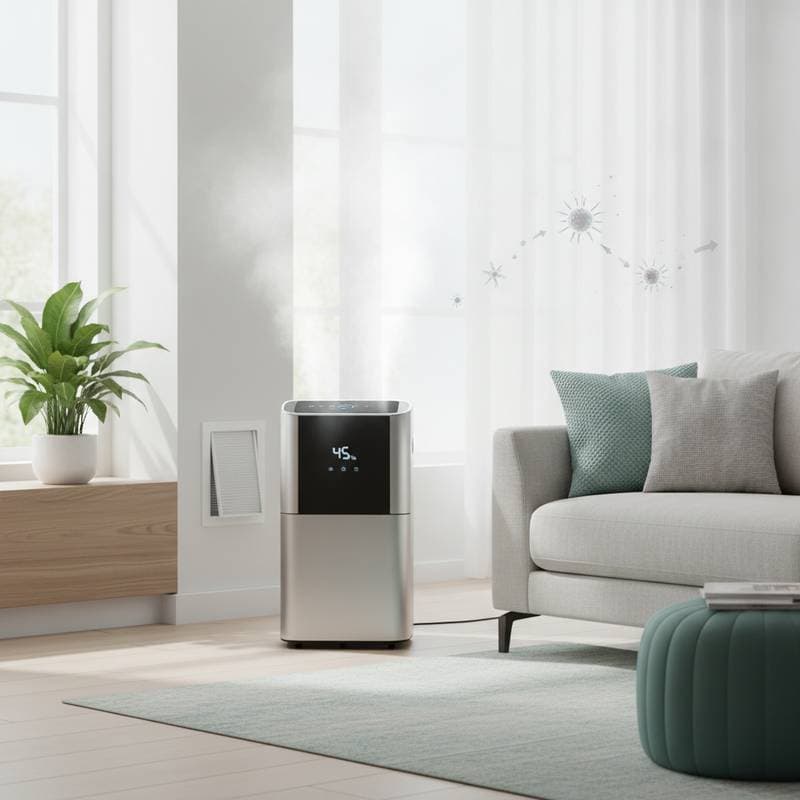
Request the following during equipment discussions. Ask for a humidity load calculation in addition to standard sizing. Inquire how variable speed operation improves moisture removal. Determine whether a standalone dehumidifier or an integrated system suits the home. Finally, review maintenance plans that include ongoing humidity monitoring.
Proper equipment selection combined with expert installation creates consistent indoor conditions throughout the year.
Frequently Asked Questions
Q: How frequently should a whole home dehumidifier operate?
A: Most units run automatically according to sensor readings. In humid climates daily operation during peak summer months is typical. Target levels are usually set between 45 and 50 percent.
Q: Does humidity control increase energy costs?
A: The opposite occurs. Drier air allows higher thermostat settings while preserving comfort, which lowers overall air conditioning runtime. Many households report energy savings between 10 and 20 percent.