Why 2026 Homes Require Dual Humidity Control Systems
Homeowners often notice that indoor spaces feel sticky during summer or excessively dry in winter despite stable thermostat readings. Standard HVAC equipment focuses primarily on temperature and frequently falls short on moisture regulation. Dual systems that pair whole home dehumidifiers with humidifiers address this gap by maintaining consistent humidity levels year round.
The Impact of Unbalanced Moisture Levels
Excessive humidity promotes mold growth, warps wooden surfaces, and increases cooling loads on air conditioners. Insufficient humidity leads to dry skin, irritated airways, and static that can harm electronics. The recommended indoor range stays between 40 and 50 percent relative humidity. Many regions experience conditions where conventional HVAC cycles end before moisture reaches target levels.
Homes in humid climates often see air conditioners stop once temperature set points are met, leaving residual moisture behind. In drier areas, heating equipment removes additional moisture and creates overly arid conditions. Dedicated dehumidifiers and humidifiers integrated with existing ductwork correct both issues without manual intervention.
Advantages of Modern Building Practices
Tighter construction improves energy efficiency yet reduces natural air exchange. This change traps moisture and airborne particles that standard systems cannot fully manage. Integrated humidity controls respond automatically to seasonal shifts and stabilize conditions across living spaces.
Components of a Dual Humidity System
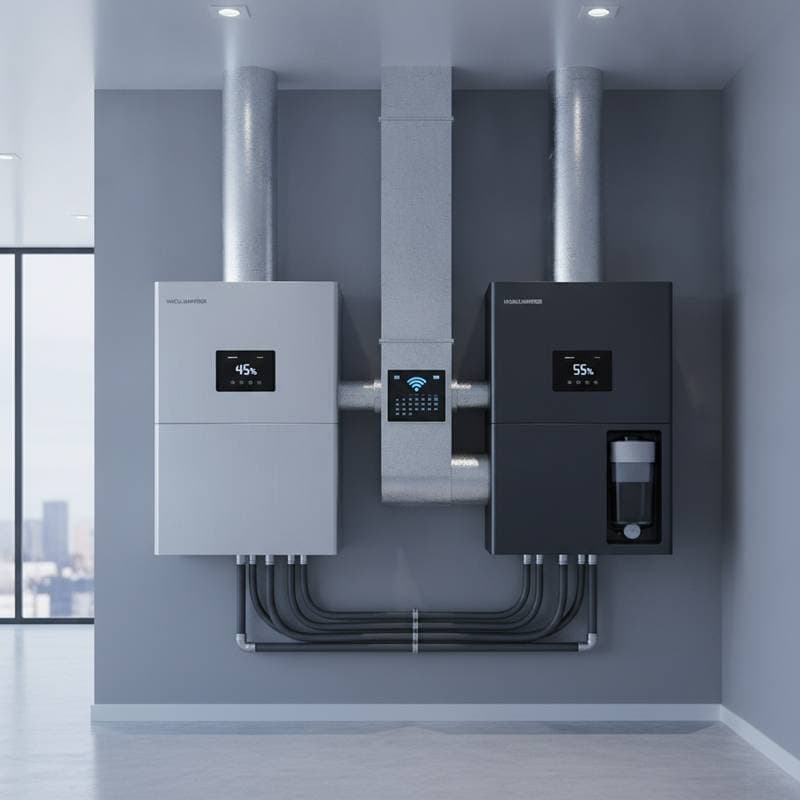
A complete setup includes two primary elements connected to the central HVAC network.
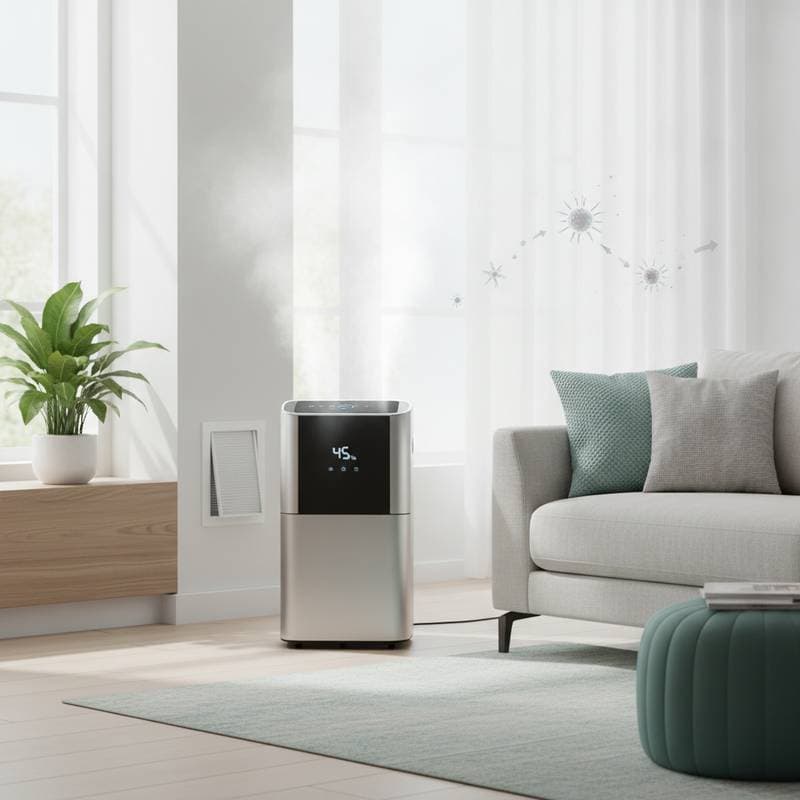
- Whole home dehumidifiers extract surplus moisture from incoming air during cooling periods and return drier air through existing vents.
- Whole home humidifiers introduce measured water vapor during heating periods to offset dryness caused by furnace operation.
These units operate independently of temperature cycles yet share the same distribution pathways.
Practical Benefits for Homeowners
Balanced humidity improves air quality by limiting mold, dust mites, and bacterial growth. Systems run fewer cycles when moisture levels remain steady, which reduces energy consumption. Equipment experiences less corrosion and buildup, extending service life. Wood furnishings and finishes maintain structural integrity. Occupants report greater comfort at the same thermostat settings.
Steps for Successful Installation
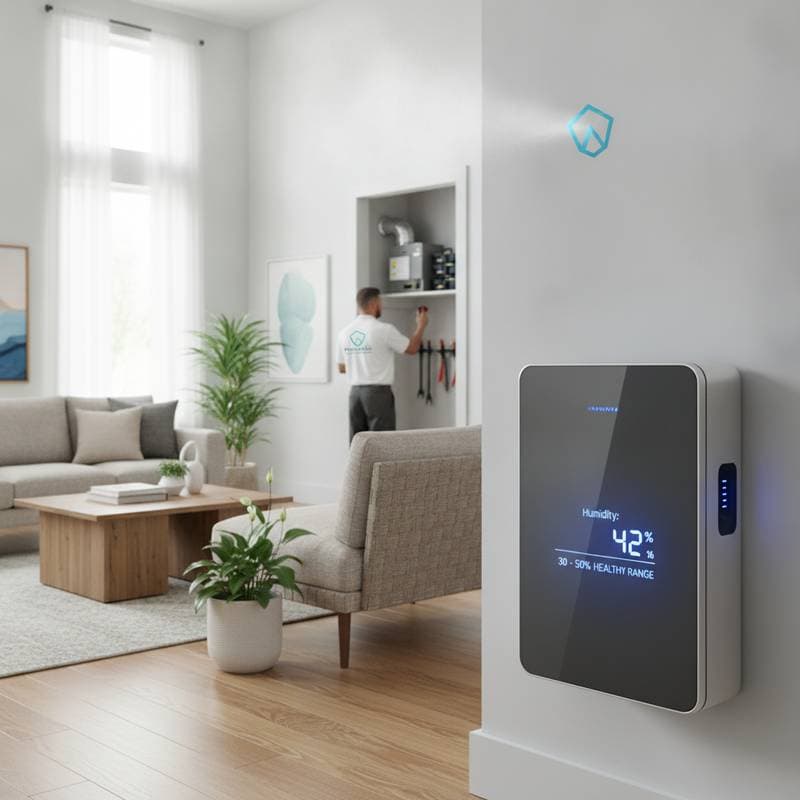
A licensed technician begins with a full load calculation and moisture assessment to determine equipment sizing. Integrated smart controls monitor both temperature and humidity in real time. Ductwork requires proper sealing to prevent uneven distribution. Quarterly filter inspections and annual sensor calibration keep performance consistent. Zoned configurations allow separate settings in larger properties.
Investment and Performance Expectations
Total project costs typically range from 2500 to 5000 dollars based on home size and equipment grade. Energy savings of 10 to 20 percent often offset the initial outlay within several years. Installation generally requires one or two days and may involve minor duct adjustments to meet local codes.
Ongoing Care Requirements
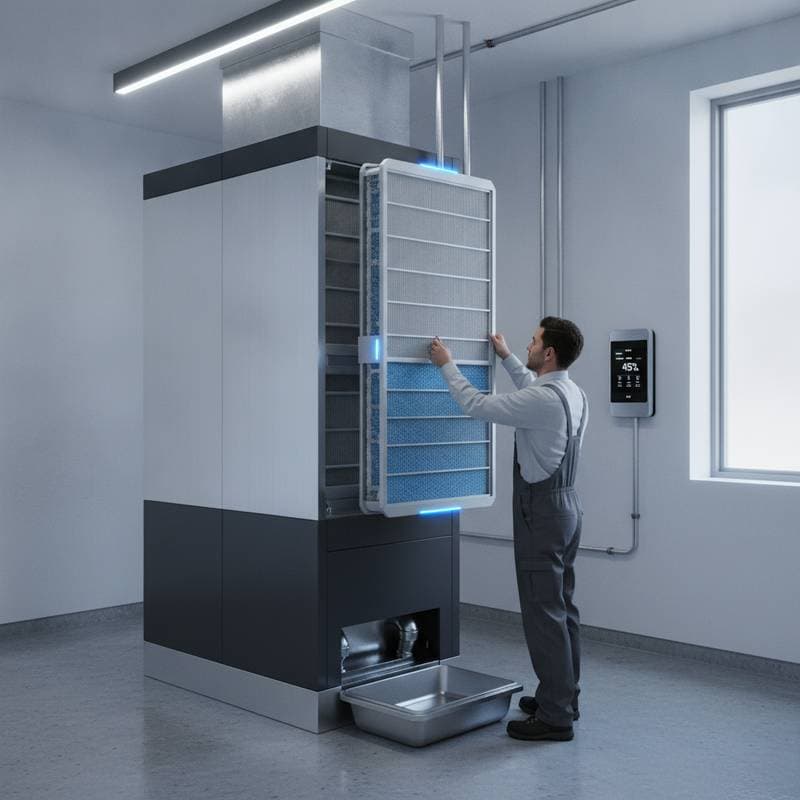
Professional service visits twice each year address electrical connections and water lines. Homeowners inspect water panels quarterly and clear drain lines to avoid obstructions. Proper maintenance prevents leaks and microbial issues inside the duct system.
Achieving Consistent Indoor Conditions
Homes that experience persistent humidity swings benefit from dedicated moisture management. Professional integration with existing HVAC equipment delivers stable comfort, lower operating costs, and improved air quality throughout every season.