Why Humidity Control Defines Modern Home Comfort
As an HVAC professional I have observed many homeowners struggle with homes that feel uncomfortable despite properly functioning air conditioning. The air often feels heavy or clammy even when the thermostat shows a cool setting. This common issue stems primarily from excess indoor moisture rather than temperature alone.
Humidity control has emerged as a central factor in achieving consistent indoor comfort. Coastal and inland homes alike experience seasonal moisture fluctuations that affect daily living. Managing these levels improves how every room feels throughout the year.
How Excess Moisture Affects Daily Comfort
Indoor humidity above fifty percent prevents efficient sweat evaporation from the skin. Occupants then feel warmer than the actual temperature indicates. This leads many people to lower the thermostat unnecessarily and increases monthly energy use.
Data from HVAC system monitoring shows that unmanaged humidity can raise cooling season energy consumption by as much as twenty percent. Elevated moisture also encourages mold formation, causes wood to warp, and reduces overall air quality. Addressing moisture directly protects both household health and structural integrity.
Core Benefits of Integrated Humidity Management
Modern HVAC equipment now incorporates humidity control as a standard capability. This development responds to clear homeowner priorities.
- Energy efficiency improves when balanced moisture permits slightly higher thermostat settings without discomfort.
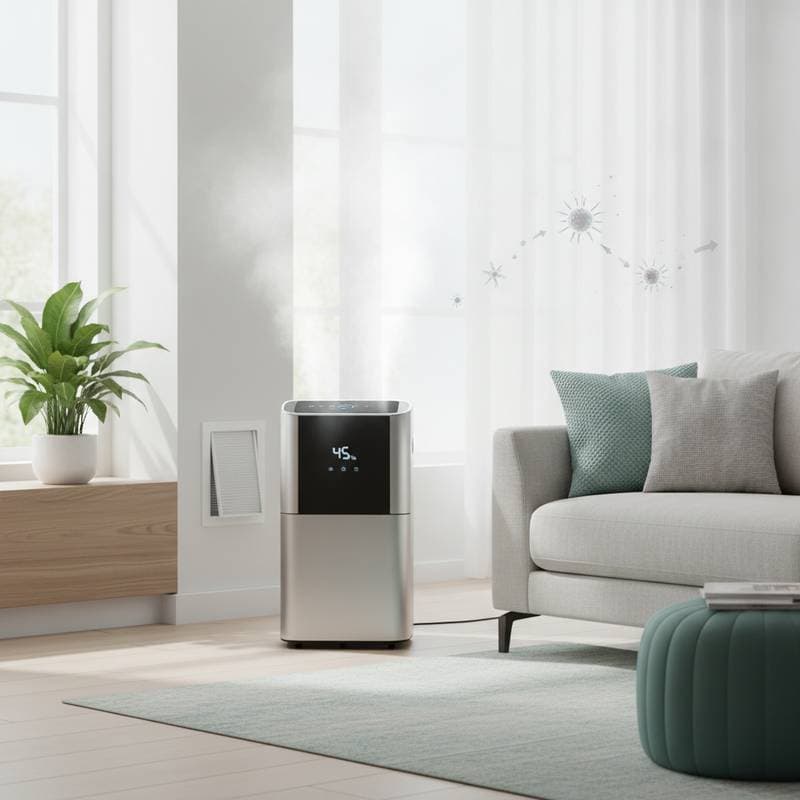
- Allergen reduction occurs because dust mites, mold spores, and bacteria thrive less readily below fifty percent relative humidity.
- Wood flooring, furniture, and framing remain stable when indoor moisture stays consistent.
- Room to room comfort becomes more uniform because the system removes moisture evenly before distribution.
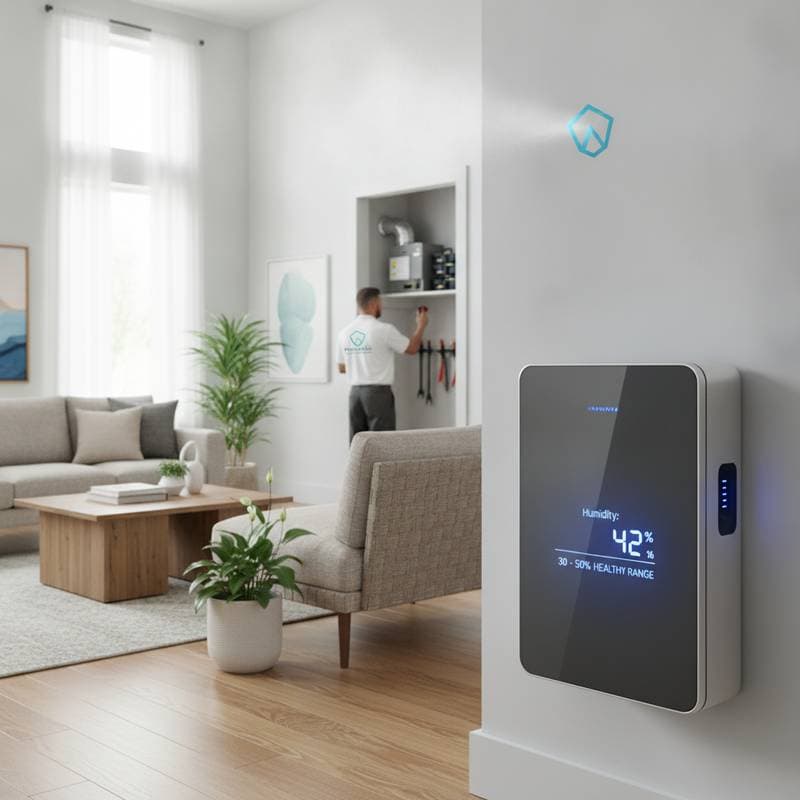
Homeowners in humid regions benefit most from a whole home dehumidifier. These units connect to existing ductwork and operate automatically without the noise or limited coverage of portable models.
Practical Steps to Achieve Balanced Indoor Moisture
Several targeted actions deliver reliable results when implemented together.
- Add a whole home dehumidifier that ties into the central air handler. The equipment extracts moisture during the cooling cycle and typically lowers relative humidity by ten to twenty percentage points.
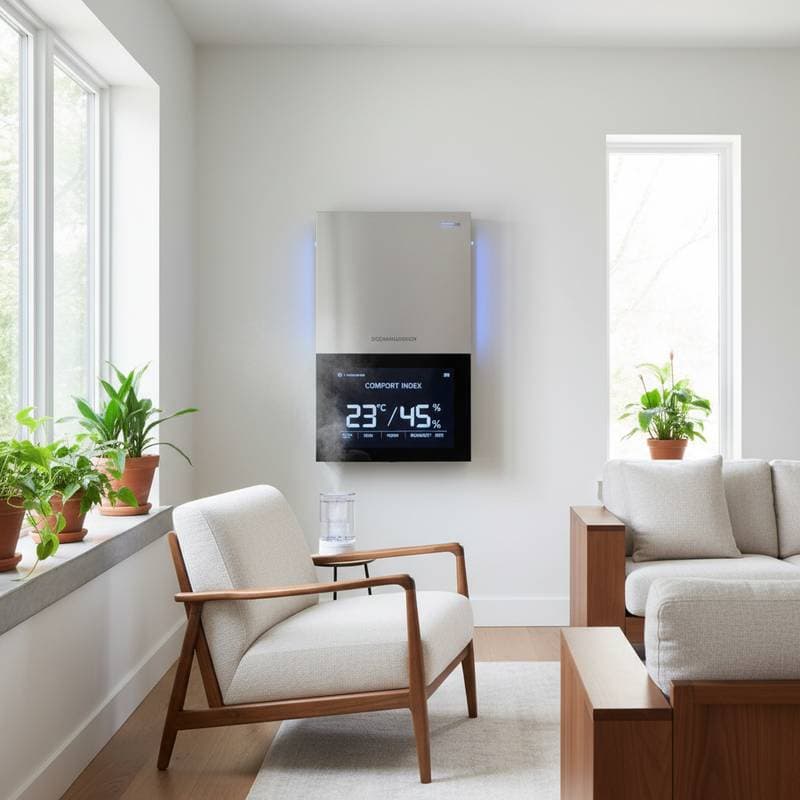
- Install a smart thermostat equipped with a humidity sensor. The device can slow fan speed or activate dehumidification mode automatically when readings rise.
- Seal gaps around windows, doors, and duct joints. An HVAC technician can locate these entry points during a standard inspection and apply appropriate sealing measures.
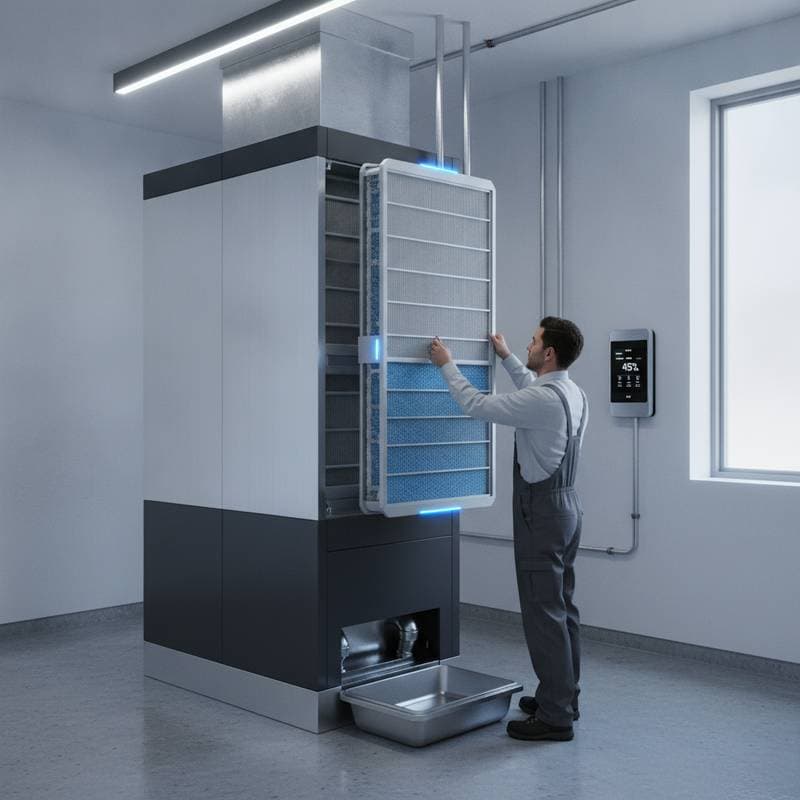
- Schedule professional maintenance twice each year. Clean coils and fresh filters maintain proper airflow and prevent moisture buildup inside the system.
Budget and Installation Realities
A whole home dehumidifier installed with a standard forced air system generally costs between two thousand and four thousand dollars. Homeowners recover part of this investment through reduced energy bills and fewer repairs related to mold or wood damage.
Most installations require only one day of work. Once the system stabilizes humidity levels, many households report energy savings between ten and fifteen percent because the thermostat can be raised a few degrees without sacrificing comfort.
Recognizing When Action Is Needed
Persistent window condensation, musty odors, or a damp sensation while the air conditioner runs all indicate that indoor moisture exceeds recommended ranges. A professional assessment measures actual humidity levels and identifies the most suitable equipment for the home and climate.
Consistent humidity management forms part of a complete comfort plan. When moisture stays within the ideal forty to fifty percent range, the air feels lighter, energy use drops, and the home environment supports better health year round.