Why Older Homes Are Rapidly Adopting Ductless HVAC Systems
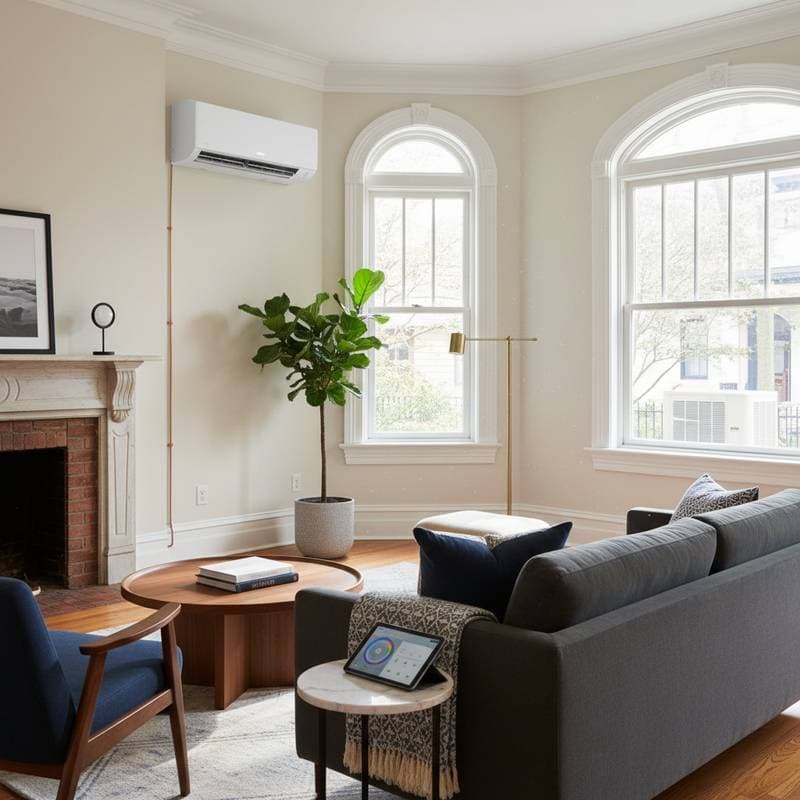
As an HVAC professional, I have observed numerous homeowners in established neighborhoods confront a familiar issue. Individuals often adore the appeal of a home built over a century ago, yet struggle with inadequate cooling during intense summer temperatures or uneven warmth in winter. The core difficulty frequently stems not from the building's age, but from its foundational design. Many such structures lack provisions for central air conditioning or contemporary duct networks. Ductless HVAC systems address these limitations effectively, providing an intelligent and versatile approach that transforms climate management in classic residences.
Challenges of Maintaining Comfort in Older Homes
Residents of older homes frequently encounter uneven temperatures across different areas. Drafts infiltrate corridors, bedrooms become excessively warm, and obsolete window air conditioners generate persistent noise. Installing conventional ducted systems demands extensive modifications, such as penetrating walls or ceilings. In properties of historical significance, such alterations risk harming authentic structural elements or decorative finishes that define the home's unique style.
These homes typically feature reduced insulation and irregular room configurations, complicating balanced air distribution. Standard systems expend energy inefficiently when forcing air through extended or confined ducts. Data from the industry indicates that leaks in ducts can lead to as much as 30 percent energy loss in properties with aged duct infrastructure. Ductless configurations bypass this inefficiency by supplying conditioned air precisely to required locations.
The Ductless Approach: Compact Efficiency and Adaptability
Ductless systems, commonly referred to as mini-splits, operate on a straightforward concept: focused climate regulation without the need for extensive ducting. Each setup comprises an external compressor unit paired with one or multiple internal air handlers positioned on walls or ceilings. Connections occur via slender refrigerant conduits rather than cumbersome ducts. From my experience as an HVAC specialist, this arrangement suits older homes exceptionally well, as it safeguards the current framework while enabling control over individual zones.
Property owners value the ability of ductless systems to manage heating or cooling in specific rooms separately. One can maintain a cool bedroom overnight, ensure a pleasant living area by day, and conserve energy in unused sections. Inverter technology in the compressors modulates performance dynamically, sustaining consistent conditions without frequent start-stop cycles characteristic of older units.
Factors Driving the Surge in Ductless HVAC Adoption
Throughout my career, I have witnessed a notable evolution in preferences. An increasing number of homeowners select ductless HVAC not merely for indulgence, but as an essential upgrade. Several elements contribute to this growing popularity:
- Superior Energy Performance: Ductless units frequently achieve Seasonal Energy Efficiency Ratio (SEER) values exceeding 20, surpassing numerous central systems. This results in reduced utility expenses, particularly beneficial in homes with suboptimal insulation.
- Structural Integrity: Installations avoid disrupting plaster walls or intricate ceilings, requiring only a modest aperture for the refrigerant pathway.
- Customized Zoning: Independent operation of each indoor component permits tailored climate settings for various areas.
- Minimal Noise Levels: Absence of duct-induced air turbulence ensures serene indoor atmospheres.
- All-Season Functionality: Numerous models serve dual roles as air conditioners and heat pumps, delivering effective warmth in cooler periods.
Installation Process for Ductless Systems in Older Homes
For those interested in the retrofit procedure, the following outlines the key phases undertaken by qualified technicians to integrate ductless systems into legacy properties.
- Initial Evaluation: Specialists assess the home's configuration, insulation quality, and thermal demands. They calculate the necessary number of indoor units and optimal positions to achieve uniform coverage.
- Unit Placement: Secure brackets are affixed to walls or ceilings for the air handlers. Strategic positioning optimizes both visual harmony and air circulation effectiveness.
- Creating Conduits: A compact opening, approximately three inches in diameter, is bored to route refrigerant lines and electrical cables from indoor components to the external compressor.
- Exterior Installation: The outdoor condenser mounts on a firm base, typically adjacent to an outer wall, to limit sound and vibrations.
- Finalization and Verification: All joints receive airtight seals, refrigerant levels adjust appropriately, and comprehensive testing confirms seamless functionality.
Single-zone setups generally complete within one to two days, whereas multi-zone projects may extend to several days, influenced by site access and any required electrical enhancements.
Strategies to Optimize Ductless System Efficiency
To ensure sustained peak operation of a ductless installation, implement these professional recommendations:
- Routine Filter Maintenance: Clean or replace filters monthly to sustain unrestricted airflow and prolong equipment durability.
- Outdoor Unit Care: Remove accumulations of debris, foliage, or snowfall to avoid impeding ventilation.
- Yearly Professional Inspections: Certified experts can verify refrigerant charges, cleanse coils, and confirm overall efficacy.
- Incorporate Intelligent Controls: Compatible systems support remote or app-based adjustments, enhancing both convenience and energy management.
- Adjust Settings Judiciously: Raise summer temperatures by a few degrees and lower winter ones slightly to achieve savings while upholding livability.
Key Planning Elements for Ductless Installation
Ductless systems prove ideal for older homes, yet preparation involves several considerations. Expenses fluctuate according to zone quantity and unit capacity. Expect $3,000 to $5,000 for a single-zone installation, with multi-zone configurations for expansive properties potentially exceeding $10,000. Returns on investment materialize via diminished energy costs and elevated comfort within a short period.
Confirm the electrical service panel's capacity to support the added demand. Certain older homes require straightforward panel modifications to integrate advanced HVAC components. Engage licensed professionals for all electrical and refrigerant tasks to adhere to safety protocols and building codes.
HVAC specialist Daniel Ruiz notes, “Retrofitting ductless systems in vintage homes gives homeowners modern comfort without compromising historic integrity. It’s the perfect blend of old-world charm and modern efficiency.” This harmony motivates selections of ductless over conventional alternatives.
Achieving Reliable Comfort in Legacy Residences
For owners of older homes plagued by temperature inconsistencies, a ductless HVAC upgrade presents a compelling resolution. It promises energy conservation, straightforward integration, and adaptable configurations that honor original craftsmanship. Success depends on choosing appropriately sized units and layouts, informed by expert guidance.
Initiate the process with a professional assessment via our service. We link you to qualified local specialists versed in retrofitting historic properties. Their expertise enables conversion of your space into an oasis of steady, economical climate control, all while cherishing its heritage.
Frequently Asked Questions
How long does a ductless HVAC system typically last?
With consistent upkeep, ductless systems endure 15 to 20 years. Regular filter cleaning and annual servicing significantly contribute to longevity.