Humidity-Balancing HVAC for Superior Indoor Wellness
Unbalanced humidity quietly undermines comfort, health, and efficiency in many homes. Sticky summer air or dry winter conditions often indicate that an HVAC system requires calibration. Modern humidity-balancing technologies correct these issues and create steady, breathable comfort throughout the year.
The Hidden Problem Behind Uncomfortable Air
Humidity affects how indoor spaces feel more than many realize. Levels above 60 percent cause air conditioners to work harder, skin to feel sticky, and homes to develop musty odors. Levels below 30 percent lead to scratchy throats, cracked wood floors, and strained heating systems.
Improper humidity ranks among the top reasons for chronic comfort complaints. High moisture promotes mold and dust mites. Low moisture worsens allergies and respiratory irritation. Regional climates dictate the approach. Coastal areas typically require moisture removal, while dry regions need added humidity. The target range remains 40 to 50 percent for wellness and performance.
Integrated Humidity-Balancing HVAC Systems
Systems that manage both temperature and humidity outperform standalone units. Whole-home humidifiers and dehumidifiers integrate directly into air handlers or duct networks. These units adjust moisture levels automatically as air circulates.
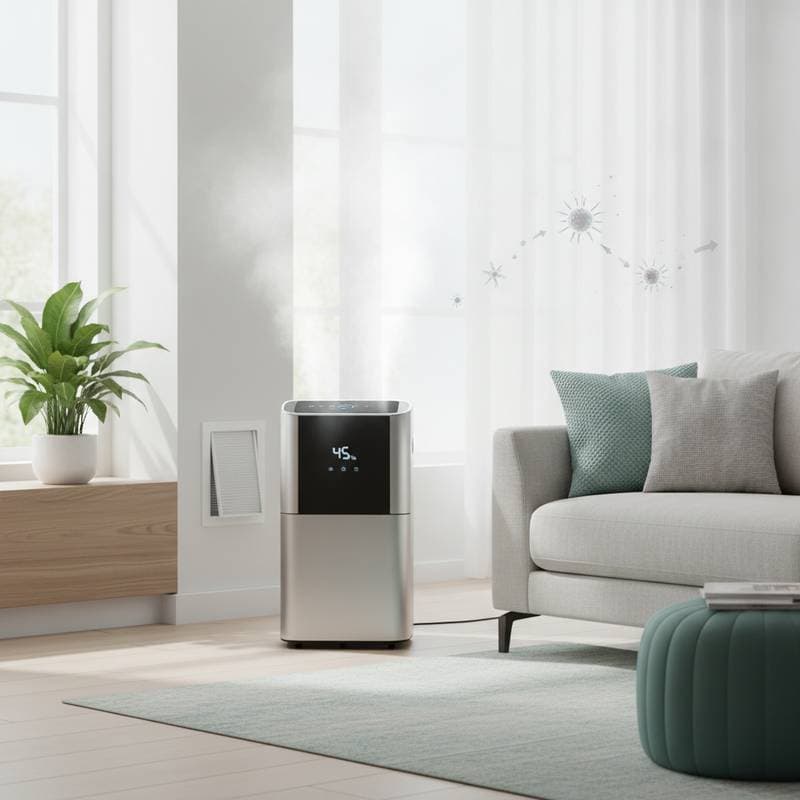
Whole-home humidifiers add measured moisture during heating cycles. Whole-home dehumidifiers remove excess moisture before air enters the ducts. Smart thermostats and sensors monitor levels in real time and adjust output without manual input. Pairing humidity control with high-efficiency filtration and energy recovery ventilators further improves air purity and system performance.
Expert Tips to Extend Comfort and Efficiency
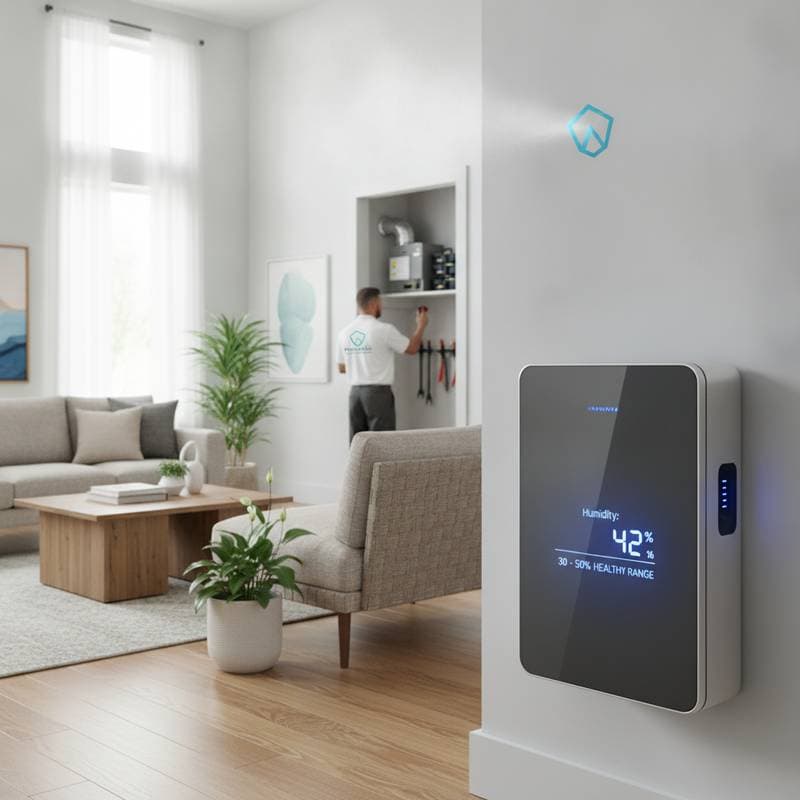
Regular monitoring reveals whether humidity stays balanced. A digital hygrometer in main living areas provides accurate readings. Ideal levels stay between 40 and 50 percent.
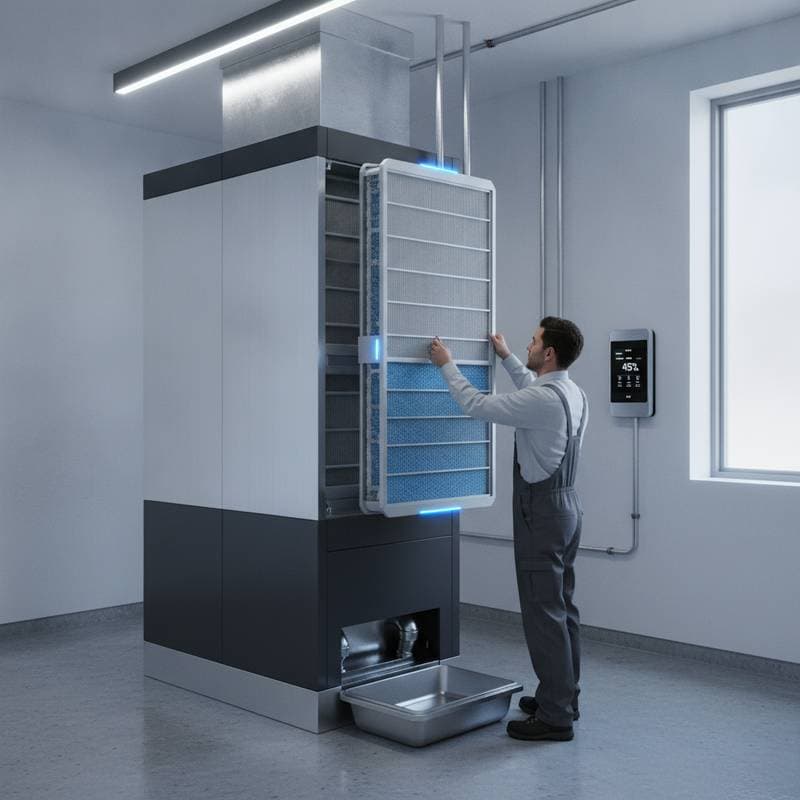
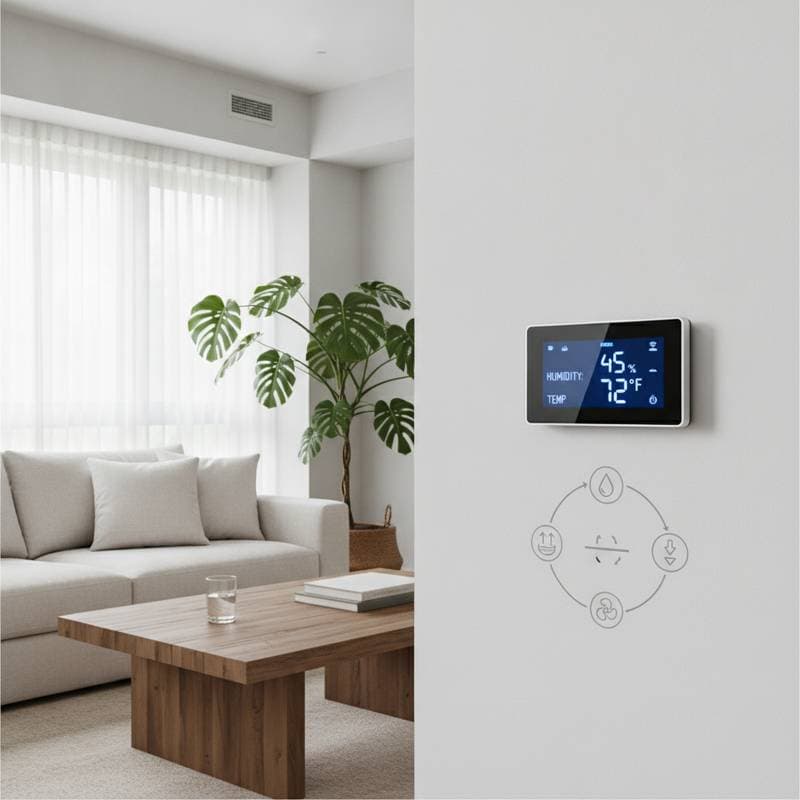
Smart thermostats with built-in humidity sensors allow automatic responses to changing conditions. Sealing leaks around windows and improving insulation prevents outside moisture from entering. Annual maintenance visits ensure coils stay clean, drain lines remain clear, and humidity controls function correctly.
Energy-efficient equipment with high SEER ratings and integrated humidity modules often pays for itself through lower utility costs within a few years.
Why Balanced Humidity Matters for Health and Home
Balanced humidity supports respiratory health by limiting virus survival and mold growth. It also protects wood furniture, floors, and trim from expansion and contraction damage. Optimal moisture levels allow thermostats to be set a few degrees higher in summer or lower in winter, which reduces energy use by 10 to 15 percent.
HVAC equipment lasts longer when it does not fight extreme moisture swings. Reduced corrosion and cleaner coils contribute to fewer repairs over time.
Step-by-Step Guide to Achieving Whole-Home Humidity Control
- Measure current levels with a hygrometer over several days.
- Inspect filters, ducts, and drain pans for moisture or dryness issues.
- Consult a licensed HVAC technician for a system evaluation.
- Select humidifier and dehumidifier types suited to the home and climate.
- Integrate controls with a smart thermostat for consistent operation.
- Monitor readings after installation and request fine-tuning as needed.
Practical Considerations Before You Invest
Whole-home humidifiers typically cost between 400 and 1200 dollars installed. Whole-home dehumidifiers range from 1000 to 2500 dollars. Smart thermostats with humidity sensing fall between 200 and 400 dollars. Annual cleaning and filter replacements keep systems reliable.
Licensed contractors must perform installations to meet local codes and preserve warranties. Properly tuned systems can cut HVAC energy consumption by up to 20 percent through reduced cycling.
Industry Perspectives
Veteran installer Mike Reynolds notes that homeowners often underestimate humidity effects on comfort. Adding humidity control produces an immediate improvement in perceived air quality. Specialist Laura Chen emphasizes that moisture balance is as important as temperature control for overall system efficiency.
Moving Toward Better Indoor Conditions
A humidity assessment with a qualified HVAC contractor provides tailored recommendations based on home size, duct layout, and local climate. Pairing humidity control with upgraded filtration maximizes both comfort and efficiency. Consistent moisture management forms the foundation for a healthier living environment year-round.