Stop Mold Growth with Effective HVAC Humidity Control
As an HVAC professional, I have observed numerous homeowners struggling with recurring mold issues despite diligent cleaning efforts. These problems often begin inconspicuously, such as a subtle musty odor near a vent or discoloration on drywall. Over time, mold proliferates, compromising comfort, health, and property value. In most instances, the underlying cause proves to be elevated indoor humidity rather than inadequate housekeeping.
Residents in areas with humid summers or moist winters face particular challenges. An HVAC system serves as both a primary safeguard and a potential weak point in mold prevention. Fortunately, implementing targeted humidity control measures establishes an indoor environment inhospitable to mold development.
Understanding Indoor Mold Development
Mold spores exist ubiquitously in the environment, but they proliferate only when relative humidity exceeds 60 percent for prolonged durations. Warm air retains higher moisture content, which condenses upon cooling onto surfaces such as vents, ducts, or inadequately insulated walls.
From extensive field experience, I identify three common initiation sites for mold:
- Within ductwork, where condensation pools.
- Near evaporator coils, particularly if dirt or clogs obstruct them.
- In basements or attics lacking sufficient ventilation.
Persistent humidity in these areas fosters ideal conditions for mold. Beyond aesthetic concerns, mold exacerbates allergies, respiratory conditions, and structural degradation within the HVAC components.
Leveraging Humidity Control for Prevention
Humidity management offers a proactive solution to mitigate mold risks. Maintaining indoor relative humidity at 40 to 50 percent effectively halts mold initiation.
Homeowners frequently achieve significant enhancements in air quality through HVAC upgrades focused on moisture regulation. Contemporary dehumidification technologies and intelligent thermostats enable automated precision in humidity maintenance.
Success depends on comprehending how HVAC systems manage temperature and moisture interplay. A well-calibrated setup promotes comfort, operational efficiency, and sustained health benefits throughout the seasons.
HVAC Impact on Indoor Humidity Levels
All HVAC systems influence moisture dynamics. Air conditioning units dehumidify during cooling, though efficacy varies with unit sizing, efficiency ratings, and operational cycles. An oversized air conditioner achieves rapid cooling but terminates prematurely, limiting moisture removal.
Conversely, heating systems in arid conditions desiccate the air excessively. While this aids mold deterrence, extreme dryness causes issues like static buildup, skin irritation, and material warping. Equilibrium remains essential.
Supplementary components, including whole-home dehumidifiers, humidistats, and variable-speed systems, provide refined adjustments. These ensure consistent, comfortable, and secure air quality.
Proven Strategies for Mold Prevention
1. Integrate a Whole-Home Dehumidifier
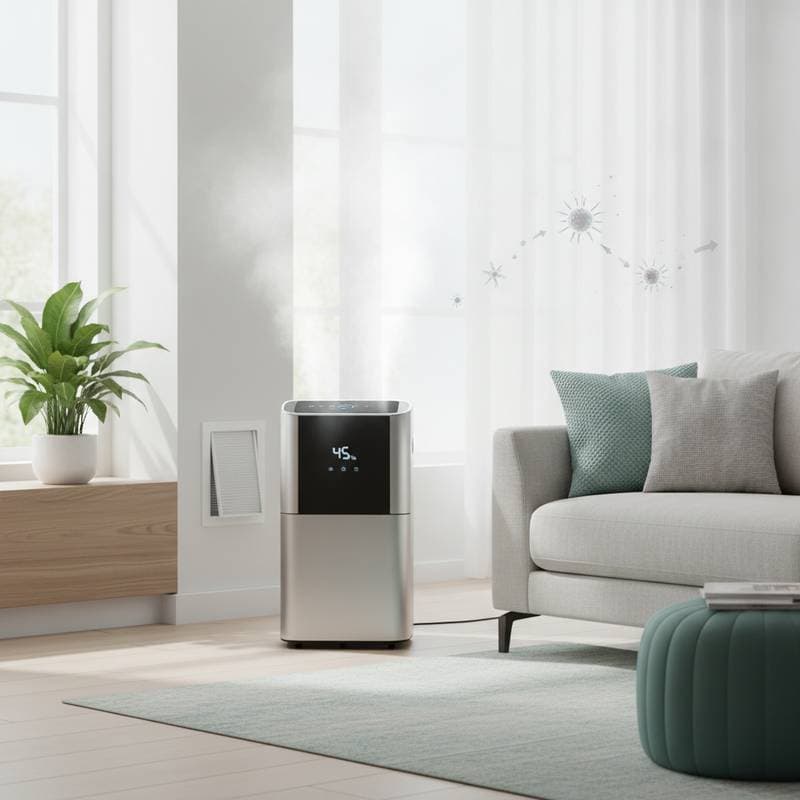
This appliance integrates seamlessly with the HVAC system to extract excess moisture prior to air distribution. It surpasses the capabilities of standalone portable devices in scope and reliability.
- Installation cost: Typically $1,500 to $3,000.
- Primary advantage: Automatic regulation of humidity, diminishing mold threats and enhancing overall comfort.
- Selection guidance: Opt for a unit calibrated to your home's size and regional climate for optimal performance.
2. Ensure Regular Maintenance of Filters and Coils
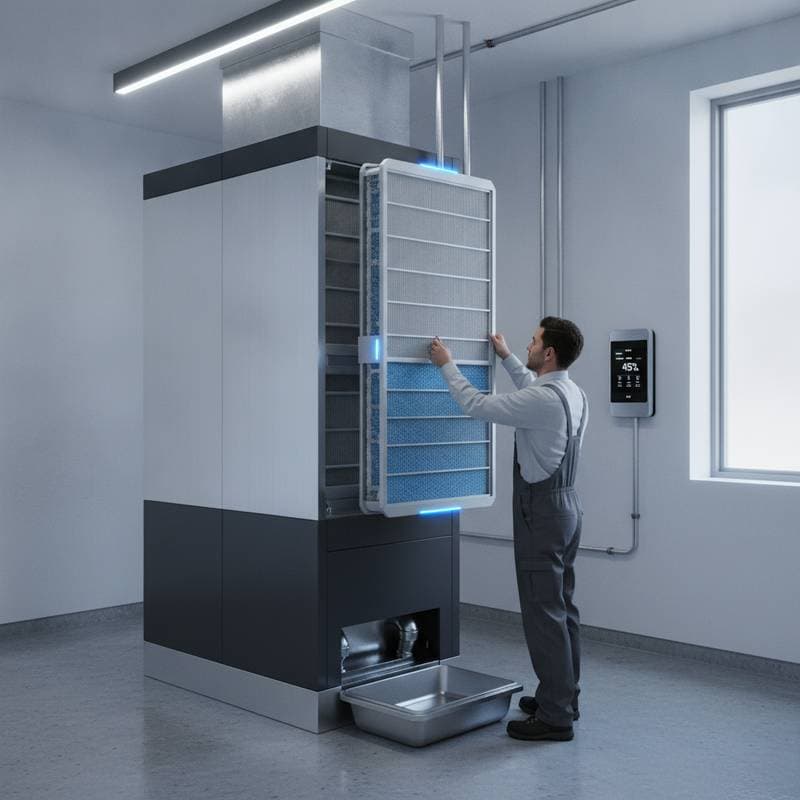
Accumulated dust and debris retain moisture, facilitating mold colonization. Exchanging air filters every one to three months sustains airflow and averts coil contamination.
- Indicator of concern: Musty odors upon air conditioner activation suggest microbial presence on coils.
- Maintenance advice: Incorporate coil cleaning into annual professional inspections. Specialists apply antimicrobial solutions to eradicate bacteria and debris while preserving coil integrity.
3. Secure and Insulate Duct Systems
Duct leaks compromise energy efficiency and introduce humid external air from attics or crawl spaces, leading to condensation.
- Diagnostic approach: Engage a technician for duct blaster testing, which quantifies leaks via pressure differentials.
- Repair expenses: $500 to $1,200, influenced by duct extent and access challenges.
- Resulting improvements: Enhanced humidity regulation, improved efficiency, and reduced concealed mold potential.
4. Adopt a Smart Thermostat Featuring Humidity Sensors
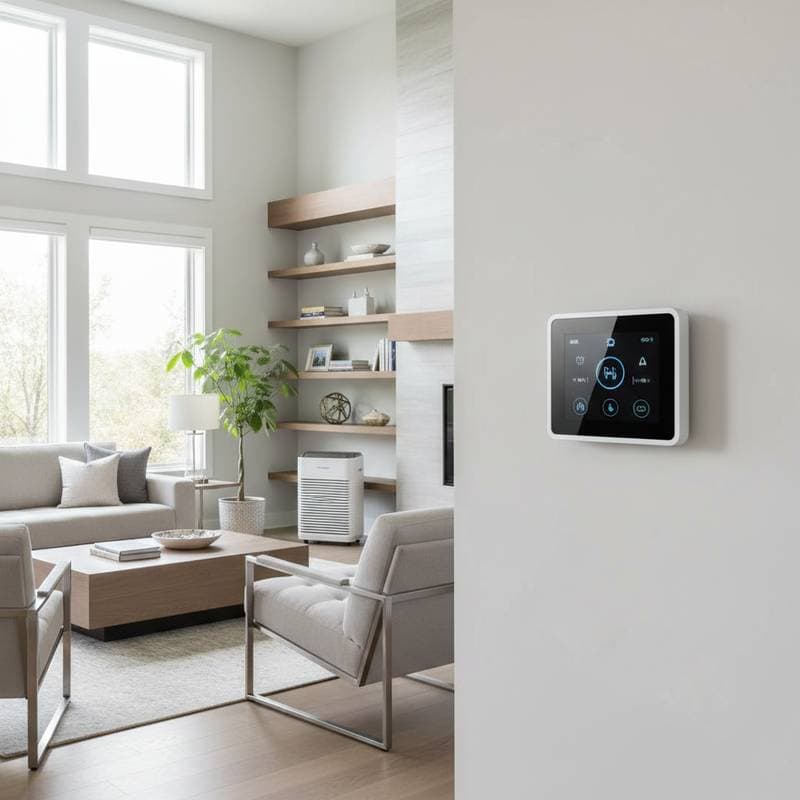
Advanced thermostats extend beyond temperature regulation to monitor and adjust humidity dynamically.
- Preferred options: Units compatible with dehumidifiers or variable-speed handlers for integrated operation.
- Key benefit: Seamless automation adapts to environmental fluctuations, stabilizing humidity year-round.
5. Enhance Ventilation in High-Moisture Zones
Areas like bathrooms, kitchens, and laundry spaces generate significant vapor. Inadequate exhaust allows humidity surges.
- Implementation steps:
- Fit exhaust fans that vent outdoors directly, avoiding attic recirculation.
- Operate fans for a minimum of 15 minutes post-shower or cooking sessions.
- Verify dryer vent integrity and clearance from obstructions.
Such measures curtail isolated mold incidents, preventing escalation to broader HVAC and structural areas.
Key Factors for Homeowners
Investment and Operational Savings
Initial expenditures on humidity controls yield enduring returns. Optimal indoor conditions optimize HVAC performance, curbing energy demands. Research indicates potential cooling cost reductions of up to 10 percent, as moderated humidity enhances perceived coolness at given temperatures.
Health and Safety Protocols
Avoid self-remediation of mold within ducts or coils due to risks from contaminants and refrigerants. Professional intervention with appropriate equipment ensures safe handling. Consult a certified technician upon detecting dark or verdant residues near vents or the air handler.
Regulatory Adherence
Certain installations, such as dehumidifiers or duct modifications, necessitate permits in specific locales. Experienced contractors navigate code requirements, guaranteeing compliance with safety and performance benchmarks.
Sustaining Balanced Humidity Throughout the Year
- Employ a hygrometer: Affordable at approximately $15, it provides accurate, ongoing humidity measurements.
- Refine thermostat configurations: Uniform temperatures minimize surface condensation.
- Assess insulation quality: Deficient barriers in attics or crawl spaces permit humid infiltration.
- Arrange biannual servicing: Routine professional checks avert 80 percent of malfunctions and uphold humidity stability.
As HVAC specialist Carla Jensen notes, “Humidity control functions as preventive medicine for your residence. Balanced levels forestall numerous subsequent complications.”
Achieving and Maintaining a Mold-Resistant Home
Envision entering a residence filled with fresh, vibrant air devoid of dampness or scents. Surfaces remain pristine, ducts stay arid, and occupants experience improved respiratory ease. Proper humidity management delivers these outcomes.
Commence by evaluating your HVAC capabilities through a professional humidity assessment. This identifies vulnerabilities, appraises existing equipment, and proposes bespoke enhancements.
Address persistent mold or moisture proactively, before visible signs emerge. Contact a qualified HVAC professional for a complimentary consultation to formulate a tailored strategy ensuring lasting freshness, efficiency, and mold resistance.
Frequently Asked Questions
Q: How can I identify excessive home humidity?
A: Indicators encompass window condensation, musty smells, and clammy air. Hygrometer readings surpassing 60 percent warrant dehumidification or ventilation enhancements.
Q: Is continuous dehumidifier operation advisable?
A: Continuous use proves unnecessary. Integrated humidistats activate units solely upon exceeding preset thresholds, conserving energy while preserving balance.
Q: Is hidden mold possible within HVAC ducts?
A: Affirmative; it frequently arises in concealed condensation-prone segments. Expert evaluations with endoscopic cameras or moisture detectors ascertain needs for remediation or sealing.