2025's Essential Upgrade: HVAC Humidity Control for Savings and Protection
Average installation cost for whole-home dehumidifiers: $1,500 to $3,500
Average cost for portable or zone systems: $800 to $2,000
Annual maintenance cost: $150 to $400
Maintaining optimal humidity levels in the home represents a strategic approach to reducing energy expenses and safeguarding the HVAC system. Whole-home solutions, such as dedicated dehumidifiers and integrated HVAC features, mitigate mold growth, enhance air quality, and decrease cooling demands. Installation costs generally fall between $1,500 and $3,500, varying by home size, equipment selection, and regional labor rates.
| Service Type | Average Cost |
|---|---|
| Whole-home dehumidifier installation | $1,500 to $3,500 |
| Portable dehumidifier setup | $800 to $2,000 |
| Smart humidity control integration | $1,000 to $2,800 |
| HVAC humidity sensor upgrade | $300 to $700 |
| Annual maintenance and filter replacement | $150 to $400 |
| Metric | Amount |
|---|---|
| National average cost | $2,400 |
| Minimum cost | $800 |
| Maximum cost | $4,500 |
| Average cost range | $1,500 to $3,500 |
Cost data derives from industry research and reported project expenses.
The Importance of Humidity Control in HVAC Systems
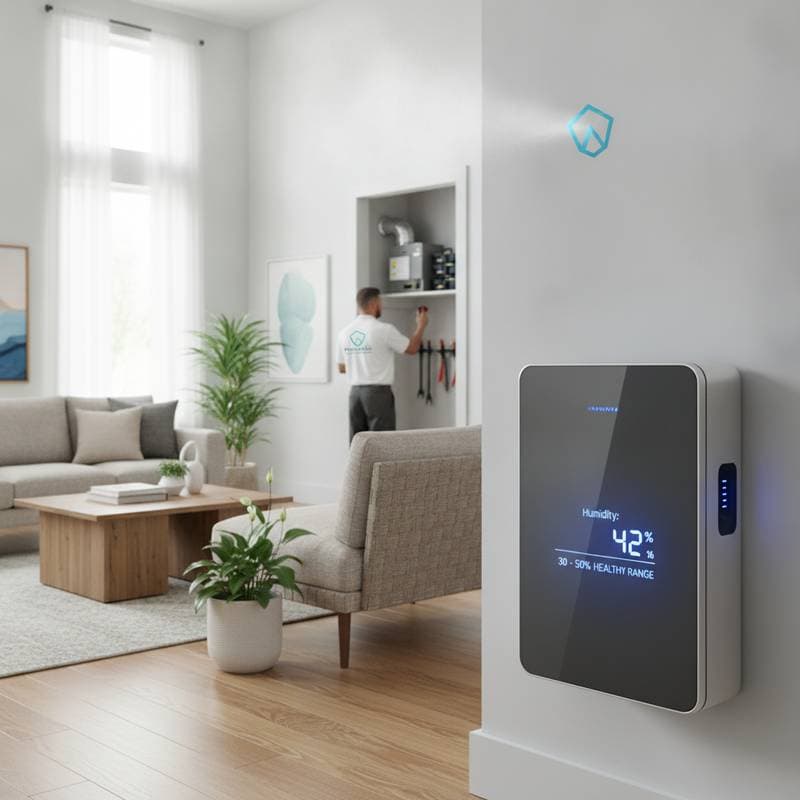
Excess humidity forces the air conditioner to operate more intensively to achieve cooling. Insufficient humidity leads to overly dry conditions that compromise comfort and health. Optimal indoor humidity, maintained at 30 to 50 percent, ensures HVAC efficiency and resident well-being. Contemporary systems incorporate sensors and dehumidification mechanisms to regulate airflow and moisture dynamically.
Comprehensive Cost Analysis for Humidity Control
Costs for Whole-Home Dehumidifiers
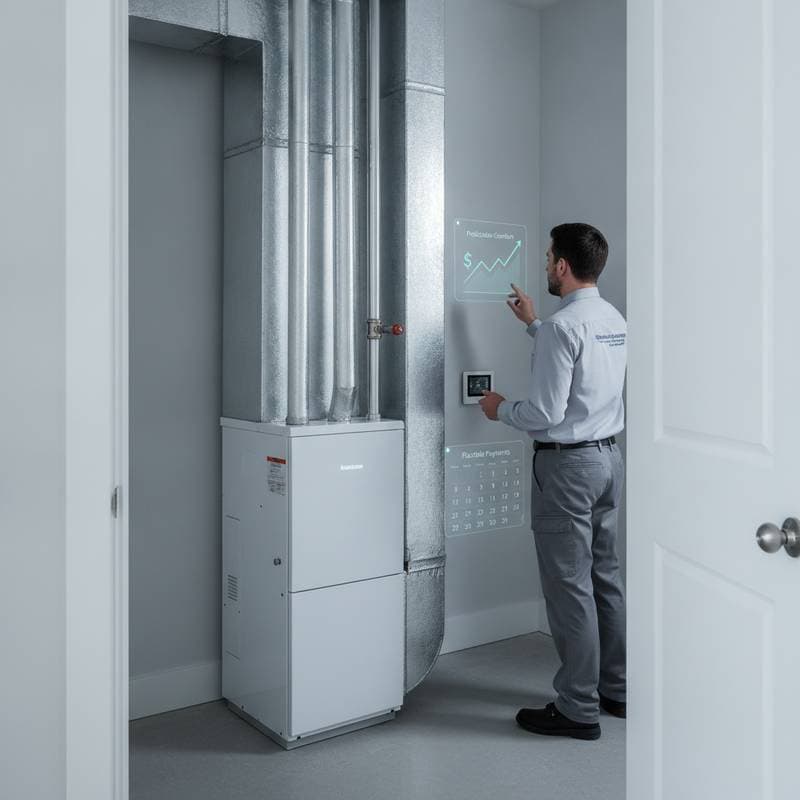
Whole-home dehumidifiers integrate seamlessly with the central HVAC system, processing air across the entire residence. Homeowners typically invest $1,500 to $3,500 in installation, encompassing equipment and professional labor.
| Home Size | Average Installed Cost |
|---|---|
| Up to 1,500 sq. ft. | $1,500 to $2,000 |
| 1,500 to 2,500 sq. ft. | $2,000 to $2,800 |
| 2,500 to 3,500 sq. ft. | $2,800 to $3,500 |
| Over 3,500 sq. ft. | $3,500 to $4,500 |
Expenses for Portable and Zone-Based Systems
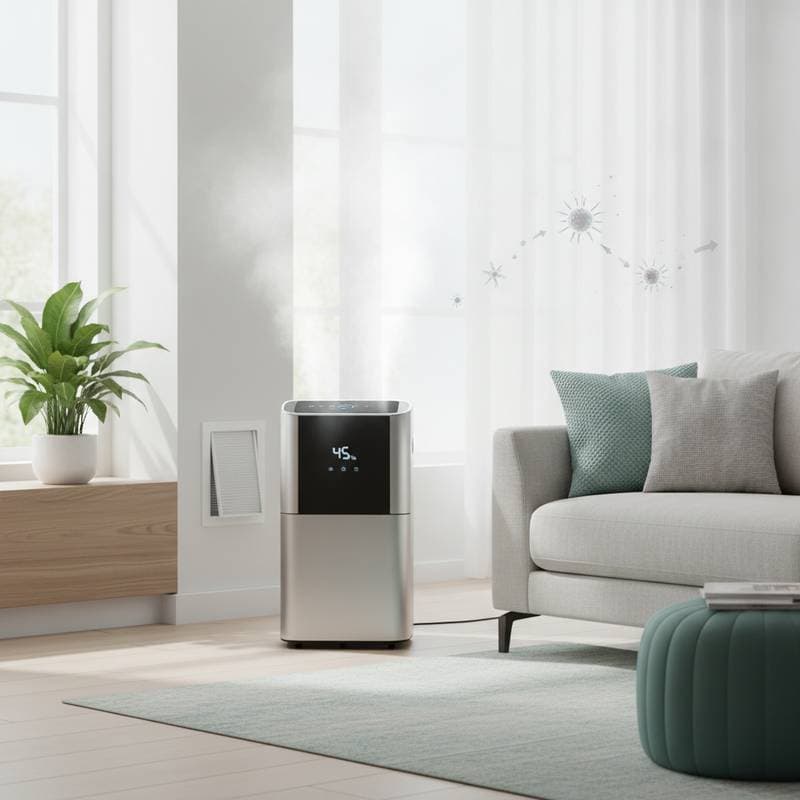
For targeted humidity challenges in areas like basements, portable or zoned units provide a cost-effective option, with installed prices from $800 to $2,000. These configurations suit smaller properties or supplementary applications.
Labor and Installation Expenses
Labor constitutes $500 to $1,200 of the overall expense. Factors such as ductwork integration, electrical access, and drainage requirements determine the precise amount. Incorporating humidity sensors or smart thermostats adds $200 to $500.
Equipment and Material Costs
Dehumidifier units cost $700 to $2,000 based on capacity and manufacturer. Smart controls and sensors contribute $200 to $600, while installation supplies like duct fittings and hoses range from $100 to $300.
| Component | Average Cost |
|---|---|
| Dehumidifier unit | $700 to $2,000 |
| Smart humidity controller | $200 to $600 |
| Installation materials | $100 to $300 |
| Professional labor | $500 to $1,200 |
Factors Influencing Humidity Control Expenses
-
Home size and layout: Larger spaces demand greater capacity, elevating equipment and labor costs.
-
Equipment efficiency: Models with variable-speed fans and advanced sensors carry higher initial prices but yield ongoing energy savings.
-
HVAC compatibility: Legacy systems might require duct upgrades, incurring $300 to $800 in additional labor.
-
Brand quality: Established names like Aprilaire, Honeywell, and Trane command premiums due to extended warranties and superior performance.
-
Labor rates: Local market variations can alter totals by up to 20 percent.
-
Installation complexity: Confined areas or non-ducted homes necessitate extended effort and resources.
-
Regional climate: Humid environments require robust systems for effective moisture management.
-
Smart integration: Compatibility with thermostats or automation platforms increases costs while enabling precise regulation and bill reductions.
Associated Expenses and Complementary Upgrades
Humidity control frequently aligns with broader HVAC enhancements. Consider these during setup:
| Related Service | Average Cost |
|---|---|
| Permit and inspection fees | $100 to $250 |
| Old equipment removal | $50 to $150 |
| Duct cleaning | $300 to $500 |
| Smart thermostat upgrade | $200 to $400 |
| Annual service plan | $150 to $300 |
Integrating humidity features during full HVAC replacement minimizes labor and maximizes compatibility. Consult contractors about combining elements when planning air conditioner or furnace updates.
Maintenance Strategies for Sustained Efficiency
Routine upkeep of humidity control systems remains straightforward yet vital to prevent repairs and sustain performance.
Essential maintenance actions include:
-
Replacing air filters every one to three months.
-
Cleaning or replacing dehumidifier coils yearly.
-
Examining drainage lines for blockages or leaks.
-
Verifying sensor calibration accuracy.
-
Arranging professional annual inspections.
Annual professional services cost $150 to $400, covering coil cleaning, drainage checks, and sensor testing.
Deciding Between Repair and Replacement
Humidity systems endure 8 to 15 years with proper care. For aging or malfunctioning units, replacement often proves more economical than repeated fixes. Minor repairs range from $150 to $600, addressing issues like electrical problems or sensor failures. Opt for replacement when repair expenses surpass half the new system cost.
Indicators of impending replacement encompass:
-
Ongoing moisture or mold presence.
-
Rising energy consumption.
-
Unusual noises or inconsistent function.
-
Recurrent service needs.
Strategies to Minimize Humidity Control Costs
Adopting humidity management presents multiple avenues for financial efficiency.
-
Time installations for off-season periods to benefit from reduced labor rates.
-
Seek rebates from utilities for efficient models.
-
Combine with HVAC or duct services to consolidate labor charges.
-
Perform consistent maintenance to avert declines in efficiency.
-
Integrate smart thermostats for automated optimization.
-
Obtain estimates from several certified professionals.
-
Select appropriately sized systems to eliminate excess energy use.