Homeowners Switch to Heat Pump Water Heaters for Savings
A hot shower should not come with the surprise of a climbing electric bill. From years in the field, HVAC professionals have seen homeowners replace aging electric tanks with heat pump water heaters and gain a practical way to reduce water heating costs without giving up everyday comfort.
If utility bills are high or the current tank is nearing the end of its service life, a hybrid heat pump model may be worth a closer look. The right choice depends on household hot water habits, installation space, and local climate. A careful assessment can help avoid costly mismatches.
How Heat Pump Water Heaters Work
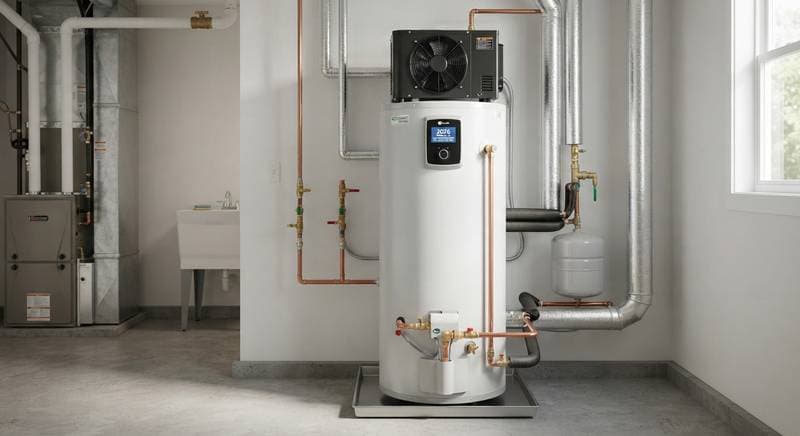
A conventional electric water heater creates heat with resistance elements. A heat pump water heater works more like a refrigerator in reverse. It draws warmth from the surrounding air and transfers that heat to the water in its tank. Since it moves heat instead of producing all of it directly, it can use substantially less electricity under suitable conditions.
The U.S. Department of Energy states that heat pump water heaters can be two to three times as energy efficient as conventional electric resistance models. Actual savings depend on local electricity rates, household usage, equipment settings, and the room where the unit sits. A family that uses a lot of hot water may see a different bill reduction than a household with modest demand.
Many models are called hybrid water heaters because they combine a heat pump with electric resistance elements. In heat pump mode, the compressor handles routine heating efficiently. When demand rises, hybrid or high-demand settings can engage the resistance elements to restore hot water more quickly.
View the upgrade as a system decision, not simply a tank swap. The unit needs adequate air, suitable drainage, and a location that can handle its cooling and sound. Get those details right, and the savings have a better chance of matching expectations.
Is Your Home a Good Fit?
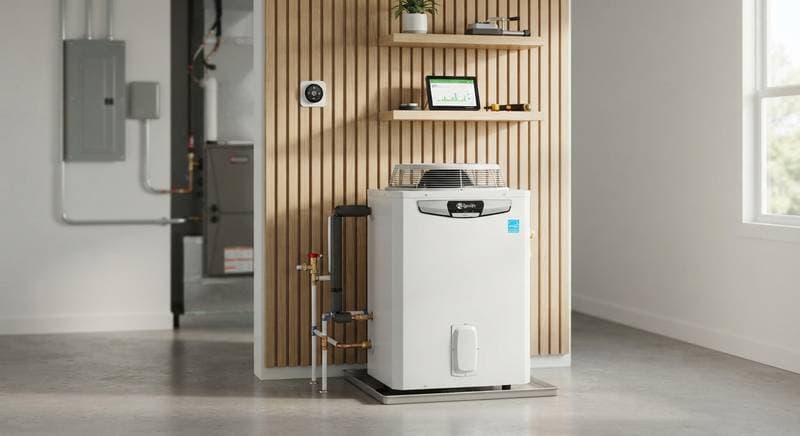
A heat pump water heater usually works best in an area that stays within the manufacturer recommended temperature range and has enough surrounding air volume. Garages, basements, and utility rooms are common candidates, though conditions differ from home to home. In cooler climates, a unit in an unheated space may draw heat from the room and make it colder. Placement deserves particular care.
Before choosing a model, consider these factors:
- Household demand. Count the number of people, bathrooms, and back-to-back showers. Tank capacity and recovery speed should fit the real routine.
- Available space. Check the manufacturer clearance requirements, ceiling height, and room volume. A larger tank may not fit where the existing heater sits.
- Air temperature. Heat pump performance can fall when surrounding air is too cold. Ask a qualified installer whether ducting or another location would help.
- Drainage. The unit produces condensate, which needs a safe route to a floor drain or approved condensate pump.
- Noise. The fan and compressor make operating sound. Avoid placing the unit near a bedroom or quiet living area if sound could bother residents.
The key to success lies in matching the equipment to the home. A promising efficiency rating cannot make up for poor placement or undersized capacity.
What Savings Can You Realistically Expect?
Savings are not identical for every household. If replacing an electric resistance tank, the potential energy reduction is often more compelling than switching from a well-performing gas water heater. The bill also reflects hot water use, utility rates, climate, and operating mode.
A useful first step is to check the current water heater energy label and compare it with the estimated annual energy use on the new model label. Ask the contractor to explain the assumptions behind any savings estimate. Be cautious of promises that guarantee a specific percentage without reviewing utility rates and household habits.
Support savings after installation by following these steps:
- Set the water temperature to a safe, comfortable level recommended by the manufacturer and installer. Many homes use a setting near 120 degrees Fahrenheit, though household needs can differ.
- Use heat pump or efficiency mode for regular operation, then select a higher-demand setting only when needed.
- Fix dripping hot water taps and insulate accessible hot water pipes.
- Run large hot water tasks at different times if the household regularly empties the tank at once.
- Clean or replace the air filter as directed, since restricted airflow can reduce performance.
Some models can connect to utility demand programs, but participation rules and compensation differ by provider. Ask the electric utility whether incentives or rebates are available before purchasing. Programs change, so confirm current requirements directly rather than relying on an old advertisement.
Choosing an Installation That Lasts
A heat pump water heater typically costs more upfront than a basic electric tank. Installed prices often fall around 2500 to 5000 dollars, though location, tank size, electrical work, drainage, venting, and access can move the total outside that range. Get a written estimate that separates equipment, labor, disposal, and any electrical or plumbing changes.
A professional should evaluate these elements:
- Electrical circuit capacity and required disconnects.
- Existing water connections, shutoff valves, and expansion tank needs.
- Condensate routing and protection against leaks.
- Airflow clearances and possible duct connections.
- Local permit and inspection requirements.
Permits and code requirements vary by jurisdiction. A licensed contractor can confirm what applies and arrange inspections when required. Do not attempt refrigerant repairs or electrical modifications. Refrigerant circuits require trained handling, and unsafe wiring can create shock or fire risks.
Ask for at least two detailed estimates and compare more than the total price. Check whether contractors are licensed and insured, whether they have heat pump water heater experience, and what support they provide after installation. Request a no-obligation quote through the platform, then ask each professional to explain the recommended unit size and placement.
Practical Tradeoffs to Consider
This upgrade can bring quieter, lower-cost water heating, but there are tradeoffs. Heat pump models can take longer to recover in their most efficient mode. If several people shower in quick succession, a larger tank or a hybrid setting may be necessary. The compressor also cools and dehumidifies the surrounding air, which may be welcome in a damp basement but undesirable in a chilly space.
Consider the full household picture before deciding:
- Upfront budget. Compare the installed price with expected savings and the remaining life of the current unit.
- Operating sound. Ask to hear a similar model or review its sound rating if the tank is near occupied rooms.
- Cold weather performance. Discuss how the unit will behave in the actual installation space, especially if that space is unheated.
- Backup operation. Confirm how resistance elements work and what the unit controls do during high demand or a fault.
- Warranty and service. Review coverage for the tank, compressor, and parts, then ask who handles warranty calls locally.
A heat pump water heater can be an excellent electric upgrade, but it is not automatically right for every home. If the current heater is gas, compare its operating cost with local electric rates before switching. In some homes, a high-efficiency gas model may remain the more economical option.
Making the Upgrade Work for Your Home
When the existing tank leaks, makes unusual noises, or struggles to provide enough hot water, action may be needed quickly. If replacement is not urgent, use the time to gather utility bills, measure the installation area, and compare equipment options. A little preparation makes it easier to separate a good fit from a sales pitch.
The smoothest projects start with an honest conversation about household routines. One homeowner may care most about lower bills, while another needs dependable hot water for a busy family. Tell the installer what matters, and ask how the proposed setup addresses those needs.
Consider installation space, climate, and household demand for optimal results. A well-sized unit, correctly placed and maintained, can deliver steady hot water while using less electricity than a conventional resistance tank. Reach out to a vetted HVAC professional and request a clear, itemized quote.
Frequently Asked Questions
How long does a heat pump water heater last?
Many units can provide service for roughly 10 to 15 years, though water quality, maintenance, and installation affect lifespan. Follow the manufacturer maintenance instructions and ask the installer about anode rod inspection and tank flushing.
Will a heat pump water heater work in a cold garage?
Performance depends on the garage temperature range and whether the unit can draw enough heat from the air. In very cold climates, performance may drop. A qualified installer can assess whether the space meets manufacturer requirements or whether another location would work better.
Does a hybrid water heater always use its heat pump?
No. Hybrid models switch between heat pump mode and resistance heating based on demand and settings. During periods of high hot water use, the unit may engage resistance elements to recover temperature faster. Regular operation in heat pump mode delivers the greatest efficiency.
Can I install one myself?
Professional installation is strongly recommended. The process involves electrical connections, condensate drainage, refrigerant handling, and local permit requirements. Licensed contractors ensure the unit meets safety codes and operates correctly from the start.