Wildfire Smoke: HVAC Filter Upgrades That Actually Work
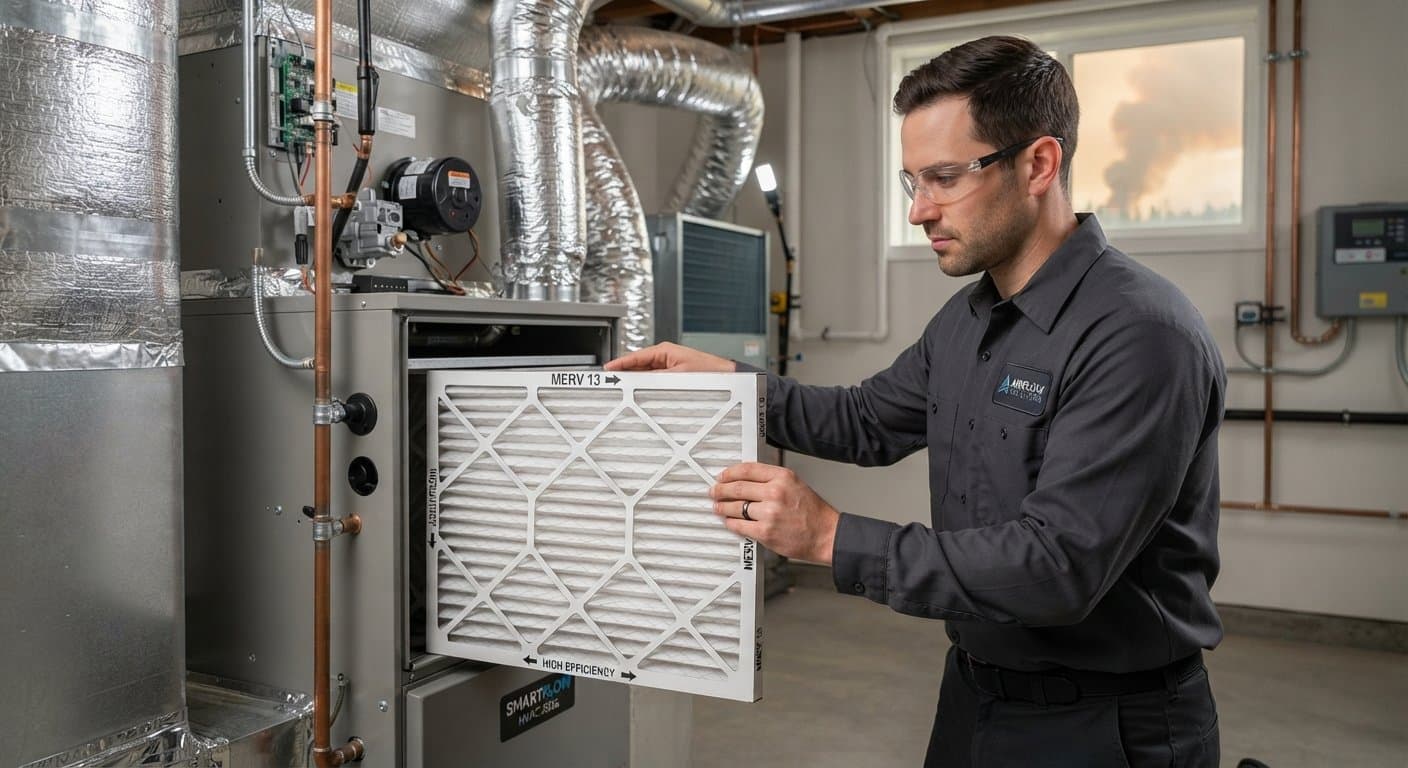
Wildfire smoke can enter your home through open doors, small leaks, and your heating, ventilation, and air conditioning system. A properly sized MERV 13 filter can capture many fine particles, but only if your HVAC equipment can handle its airflow resistance.
A filter upgrade typically costs between twenty and one hundred dollars for a replacement filter. Professional HVAC adjustments or filtration upgrades can cost between one hundred fifty and fifteen hundred dollars or more. Your system type, filter size, and ventilation needs determine the right choice.
| Filter or service | Average cost |
|---|---|
| Standard pleated filter, MERV 8 to 11 | $10 to $40 |
| MERV 13 replacement filter | $20 to $100 |
| Portable HEPA air cleaner | $100 to $700 |
| HVAC airflow assessment | $100 to $300 |
| Whole-home filtration upgrade | $300 to $1,500 or more |
A MERV rating, or Minimum Efficiency Reporting Value, measures how well a filter captures particles. For wildfire smoke, a compatible MERV 13 filter is a practical upgrade for many forced-air systems. No filter can remove every smoke pollutant. Get an HVAC professional to check your system before installing a denser filter.
How Wildfire Smoke Filters Work
Wildfire smoke contains fine particles, including PM2.5, which are particles smaller than 2.5 micrometers. These particles can travel deep into the lungs. Standard HVAC filters mainly protect equipment from larger dust and lint, so they may capture only a portion of fine smoke particles.
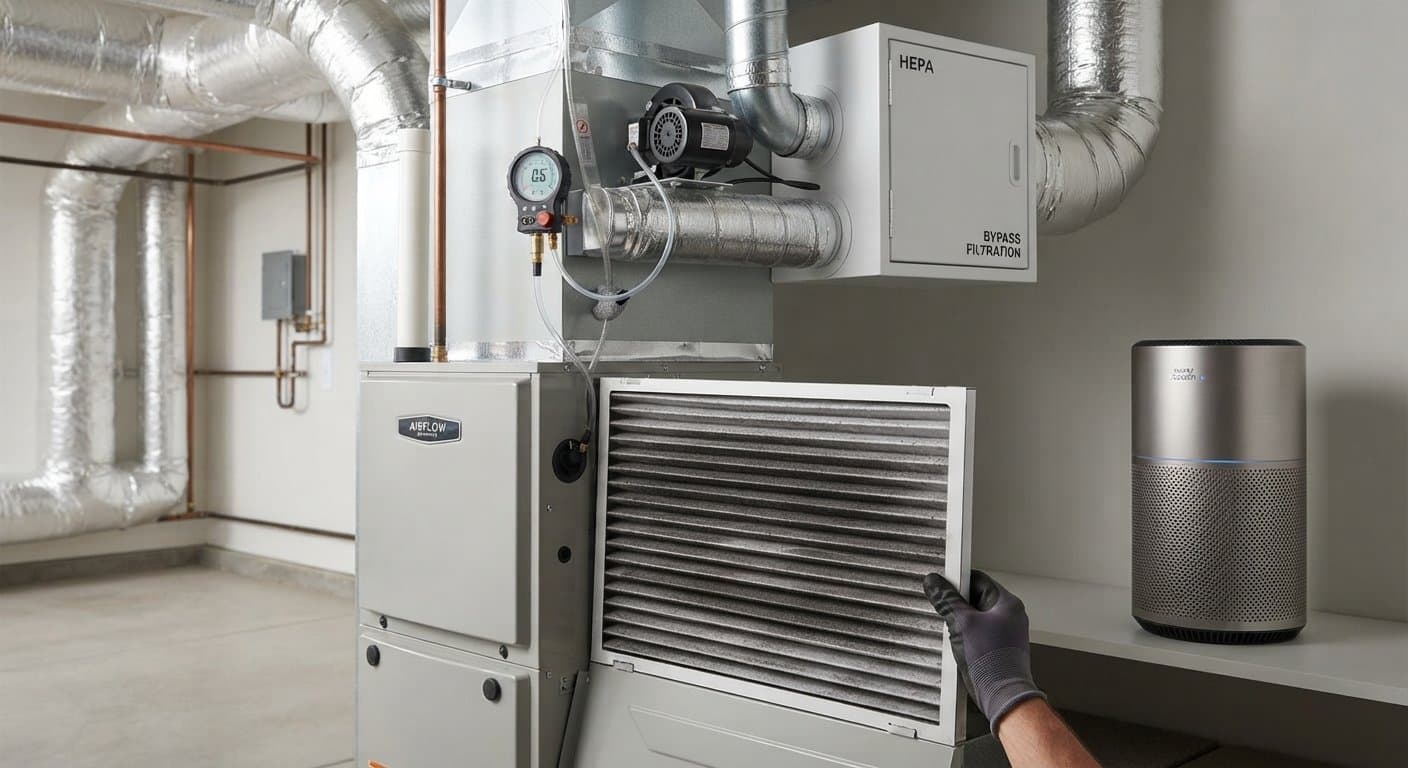
A higher-efficiency filter uses denser or specially arranged media to catch more small particles. MERV 13 filters can capture a substantial share of particles in the 0.3 to 1 micrometer range when properly installed and used in a compatible system. HEPA filters capture at least 99.97 percent of particles at 0.3 micrometers, but typical central HVAC equipment cannot accommodate a HEPA filter without purpose-built changes.
The filter needs to fit tightly in its slot. Gaps around the frame allow unfiltered air to bypass the media, reducing its effectiveness.
MERV Filter Ratings and Typical Prices
| Filter rating | Typical use | Average cost |
|---|---|---|
| MERV 8 | Basic dust and equipment protection | $10 to $30 |
| MERV 11 | Improved capture of smaller particles | $15 to $50 |
| MERV 13 | Better fine-particle filtration | $20 to $100 |
| HEPA | Dedicated portable or whole-home equipment | $100 to $1,500 or more |
Prices depend on filter dimensions, thickness, construction, and brand. A thicker media cabinet can offer more filter surface area, which may reduce airflow resistance compared with a thin, high-efficiency filter. Ask an HVAC technician to confirm the correct size and allowable resistance for your equipment.
What Affects the Cost of a Filter Upgrade
Filter size and thickness matter. Oversized or uncommon dimensions may cost more. A deep media filter often costs more upfront, but it can last longer than a thin filter in similar conditions.
System compatibility affects the total investment. A furnace or air handler may not support a high-resistance filter. Testing and adjustments can add one hundred to five hundred dollars or more.
Existing filter cabinet conditions also play a role. A standard slot may need a larger media cabinet. Installation can raise the total to three hundred to one thousand dollars or more.
Airflow and duct condition influence whether a denser filter will work. Restricted ducts, dirty coils, or a weak blower can make a denser filter unsuitable until the system is corrected.
Portable air cleaner capacity determines the price range. A unit sized for a small bedroom costs less than one designed for a large living area. Check its clean air delivery rate, which indicates how quickly it can filter a room.
Installation complexity adds to labor costs. Tight access, custom ductwork, or electrical work increases labor costs.
Smoke exposure affects ongoing expenses. Heavy or prolonged smoke can load a filter faster, so replacement frequency and ongoing costs may rise.
Can Your HVAC System Use a MERV 13 Filter
Many newer forced-air systems can use MERV 13, but the rating alone does not confirm compatibility. A dense filter can reduce airflow, which may strain the blower, lower heating or cooling performance, and contribute to equipment problems. System age, filter thickness, duct design, and manufacturer specifications all matter.
Check your equipment manual for the maximum filter resistance or recommended MERV rating. If the guidance is unclear, ask a licensed HVAC contractor to measure static pressure, the resistance to airflow inside the system. A professional can recommend a compatible filter or changes to the filter cabinet and ductwork.
Avoid stacking filters or trimming one to fit. A loose or altered filter may let smoke particles bypass the media.
Filter Upgrades Compared With Other Options
| Option | Average cost | Best use |
|---|---|---|
| MERV 13 HVAC filter | $20 to $100 | Whole-home particle capture when compatible |
| Portable HEPA cleaner | $100 to $700 | Targeted cleaning in a bedroom or occupied room |
| Activated carbon filter | $20 to $150 | Reducing some smoke odors and gases |
| Whole-home filtration system | $300 to $1,500 or more | Larger homes or ongoing filtration needs |
HEPA filtration targets particles, while activated carbon helps reduce some odors and gases. Carbon media does not replace particle filtration, and it can become saturated. For smoke, a portable HEPA unit in the room where you spend the most time can complement central HVAC filtration.
Related HVAC Costs to Consider
A filter change may be all your system needs, but older equipment can require additional work. Professional cleaning, duct sealing, or a media cabinet installation can improve performance when an assessment identifies a specific problem.
| Related service | Typical cost |
|---|---|
| HVAC maintenance visit | $75 to $200 |
| Duct inspection | $80 to $250 |
| Duct sealing or minor repair | $300 to $1,000 |
| Media filter cabinet installation | $300 to $1,000 |
| Whole-home air cleaner installation | $500 to $2,000 or more |
These are broad estimates, not a substitute for a written quote. Ask contractors to separate equipment, labor, and any duct or electrical work.
How to Use HVAC Filtration During Smoky Conditions
Keep windows and exterior doors closed when outdoor air quality is poor, and set the system to recirculate air if your equipment offers that option. Run the fan continuously only if your HVAC system and filter setup are designed for it. Continuous operation can improve filtration but may increase electricity use and place extra demand on the filter.
Replace a loaded filter when it looks dirty or airflow drops, following the filter maker instructions. During severe smoke exposure, inspect it more often than usual. Do not rely on appearance alone, since fine particles may not be easy to see.
Helpful steps include:
- Choose a snug fit. Match the filter dimensions and airflow direction to the equipment.
- Clean the return grille. Dust on the grille can restrict airflow before air reaches the filter.
- Limit indoor particle sources. Avoid smoking, burning candles, and frying foods during smoky periods.
- Use a portable cleaner strategically. Place it in an occupied room with clear space around its intake and outlet.
- Keep indoor humidity moderate. Excess moisture can encourage mold and does not remove smoke particles.
When Should You Upgrade Your Filter
Consider a MERV 13 filter if your system manufacturer permits it and you want better capture of fine particles. If the system cannot handle that rating, use the highest compatible filter and add a properly sized portable HEPA cleaner in key rooms.
An upgrade may be especially useful for households with asthma, heart or lung conditions, older adults, or children. People with health concerns should follow advice from their healthcare provider and local public health officials. Filtration can reduce airborne particles, but it does not make a smoke-affected home completely safe.
Ways to Control Filtration Costs
Confirm compatibility first. A quick system assessment can prevent damage from an unsuitable filter.
Compare filter dimensions. Prices vary widely among brands with the same rating and size.
Choose the right filter depth. A larger media surface can balance particle capture with airflow.
Use portable cleaners by room. One effective unit in a frequently occupied room may be more affordable than a whole-home retrofit.
Keep up with maintenance. Clean coils and unobstructed returns help preserve airflow.
Request multiple quotes. Compare at least two or three written proposals for permanent equipment changes.
Ask about rebates. Some local programs or utility providers offer incentives for qualifying air quality equipment.
Questions to Ask an HVAC Contractor
Before approving a filter or filtration project, ask the contractor to explain how the recommendation fits your equipment. A useful quote should identify the filter rating, dimensions, pressure limits, installation work, and maintenance requirements.
- Is my system rated to use a MERV 13 filter?
- Can you measure static pressure before and after the upgrade?
- What filter size and thickness do you recommend?
- Will the new filter reduce airflow or affect system performance?
- Do I need a media cabinet or duct modification?
- What is the full cost, including labor and materials?
- How often should I inspect or replace the filter during smoke events?
- What warranties cover the equipment and installation?
- Are you licensed and insured for this work?
- Can you provide references for similar filtration projects?
Get written estimates and check that the contractor holds the required local license and insurance. Look for relevant HVAC training and experience with airflow testing, not just equipment sales.
Wildfire Smoke Filtration FAQ
Does a MERV 13 filter remove wildfire smoke?
A MERV 13 filter captures many fine particles found in wildfire smoke when it fits correctly and the HVAC system provides adequate airflow. It does not remove every gas, odor, or pollutant. Pairing central filtration with a portable HEPA cleaner can provide extra particle reduction in selected rooms.
Is MERV 13 always better than MERV 11?
MERV 13 generally captures more fine particles, but it is not automatically the best choice for every system. If it restricts airflow, a compatible MERV 11 filter plus a portable cleaner may work better than an unsuitable filter upgrade.
How often should I change a filter during wildfire smoke?
Inspect the filter more often during heavy smoke and replace it when it becomes loaded or airflow declines. Follow the manufacturer guidance, since the right interval depends on smoke exposure, household activity, and filter design.
Will an HVAC filter remove smoke odors?
Particle filters reduce airborne particles but may not remove many odor-causing gases. Activated carbon media can reduce some odors, though its effectiveness depends on the amount of carbon and how quickly it becomes saturated.
Can I put a HEPA filter in my furnace?
Usually, not directly. Most residential furnaces are not designed to push air through a HEPA filter, which creates substantial resistance. Use a portable HEPA cleaner or ask a contractor about a properly engineered whole-home system.
Should I run my HVAC fan during a smoke event?
Recirculating air through a compatible filter can reduce indoor particles. Check your system instructions before running the fan continuously, and avoid settings that draw in outdoor air when smoke levels are high.
Next Steps for Better Indoor Air Quality
Check the equipment manual and filter dimensions, then request a professional airflow assessment if compatibility is uncertain. A correctly fitted, system-approved filter provides a practical starting point for reducing smoke particles indoors.